


 Deutsch
 English
 Español
 Français
 Nederlands
 Português


 Share
Share




The World Economic Forum's Global Risks Report 2026 has ranked geoeconomic confrontation as the top most-likely global risk for the first time, surpassing state-based armed conflict. Published in January 2026, the report signals a fundamental shift in how major powers compete: tariffs, export controls, investment screening, and capital flow restrictions have become the primary instruments of strategic rivalry. This article examines how the weaponization of trade and finance is reshaping supply chains, raising capital costs, and forcing corporations and governments to recalibrate their risk assumptions for the year ahead.
What Is Geoeconomic Confrontation?
Geoeconomic confrontation refers to the use of economic tools—such as tariffs, sanctions, export controls, and investment restrictions—to achieve strategic objectives. Unlike traditional trade disputes, geoeconomic confrontation is driven by geopolitical rivalry rather than commercial interests. The WEF Global Risks Report 2026 defines it as a top risk because it can trigger cascading crises across supply chains, financial markets, and international cooperation. According to the report, 18% of surveyed experts selected geoeconomic confrontation as the risk most likely to cause a material global crisis in 2026, up from 14% for state-based armed conflict.
Why Trade and Finance Have Become Battlefields
The Weaponization of Tariffs
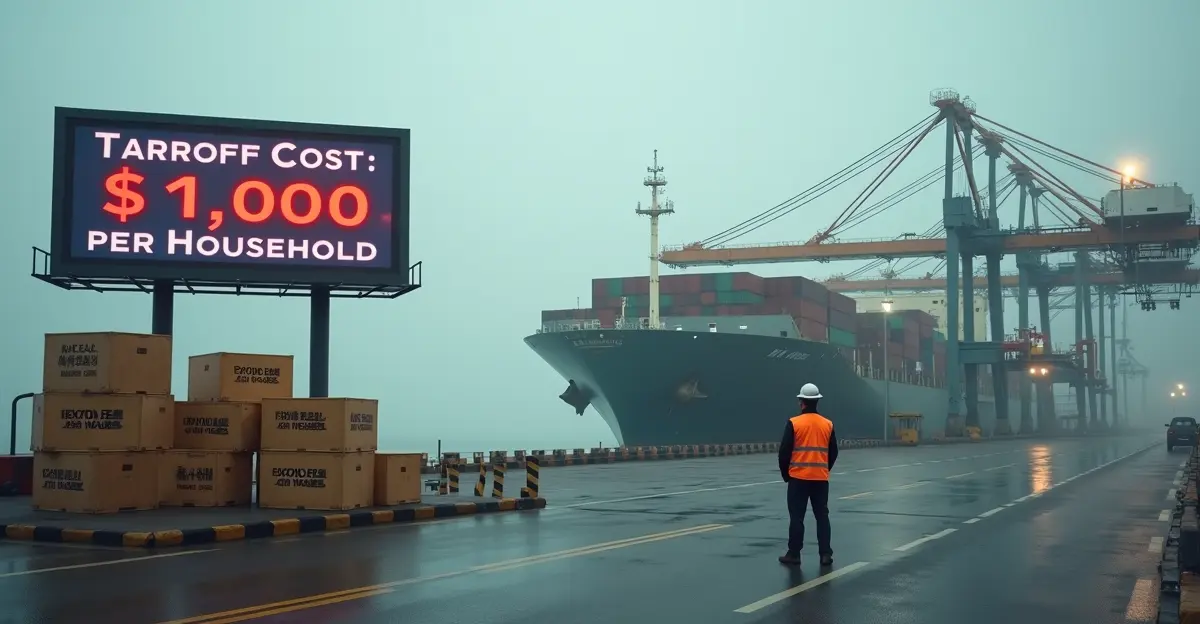
In March 2026, the U.S. Trade Representative released the President's 2026 Trade Policy Agenda, outlining six core priorities that include continuing the Agreement on Reciprocal Trade (ART) program, enforcing Section 301 actions on China's semiconductors and shipbuilding, and pursuing supply chain resilience by reshoring critical industries. The agenda explicitly targets tariff disparities—the U.S. average tariff is 4%, compared to China's 10%—and aims to address trade deficits that reached $197 billion with Mexico and $46 billion with Canada in 2025. These measures reflect a broader trend: tariffs are no longer just about trade balance but are used to exert strategic pressure.
Export Controls and Investment Screening
Export controls on advanced semiconductors, AI technologies, and quantum computing have become a key battleground. The U.S. has expanded restrictions on Chinese access to cutting-edge chips and manufacturing equipment, while the EU has introduced its own screening mechanisms for foreign direct investment. The US 2026 Trade Policy Agenda emphasizes robust enforcement of trade laws, including Section 301 investigations into China's compliance in shipbuilding and semiconductors. These controls disrupt global supply chains and force companies to choose between markets, raising costs and reducing efficiency.
Capital Flow Restrictions and Financial Coercion
Financial tools are also being weaponized. Sanctions on Russian assets, restrictions on Chinese capital flows, and the potential for secondary sanctions on entities doing business with adversaries have created a complex compliance environment. The WEF report notes that economic risks like downturn and inflation both climbed eight positions year-on-year, reflecting the cascading effects of financial coercion. Capital costs are rising as investors demand higher risk premiums for exposure to geopolitically sensitive sectors.
Impact on Supply Chains and Corporations
The shift from multilateral cooperation to geoeconomic coercion is forcing corporations to rethink their supply chain strategies. The reshoring of critical supply chains has become a priority for governments, with the U.S. targeting pharmaceuticals, semiconductors, metals, and critical minerals. For businesses, this means higher costs, longer lead times, and the need to build redundancy into their networks. A survey of 1,300 global leaders cited in the WEF report found that 50% expect a turbulent or stormy global outlook over the next two years, while only 1% expect calm. This uncertainty is driving companies to stress-test their trade, foreign exchange, sanctions, and supply chain exposures.
Expert Perspectives
"Geoeconomic confrontation is not just a risk—it is the defining feature of the current geopolitical landscape," said Saadia Zahidi, Managing Director of the World Economic Forum, at the report's launch in January 2026. "Leaders must recognize that economic tools are now primary instruments of strategic rivalry, and prepare for a world where trade and finance are contested domains." Similarly, the USTR's 2026 Trade Policy Agenda states that "the United States will use all available tools to protect its economic security and ensure that trade agreements deliver for American workers."
FAQ: Geoeconomic Confrontation in 2026
What is geoeconomic confrontation?
Geoeconomic confrontation is the use of economic tools—such as tariffs, export controls, sanctions, and investment restrictions—to achieve geopolitical objectives, rather than purely commercial goals.
Why is it the top risk in 2026?
The WEF Global Risks Report 2026 ranks it first because 18% of experts see it as the most likely trigger of a global crisis, surpassing armed conflict, due to escalating trade wars and financial coercion among major powers.
How does it affect businesses?
Businesses face higher costs from disrupted supply chains, increased compliance burdens from export controls and sanctions, and greater uncertainty in investment decisions, forcing them to build resilience and diversify operations.
What are the key tools used?
Key tools include tariffs, export controls on advanced technologies, investment screening mechanisms, capital flow restrictions, and financial sanctions, all of which are being deployed more aggressively by major economies.
What can governments do to mitigate the risk?
Governments can strengthen multilateral dialogue, create transparent rules for economic statecraft, and invest in domestic resilience while avoiding escalatory measures that deepen fragmentation.
Conclusion: A New Era of Competition
The rise of geoeconomic confrontation marks a departure from the post-war multilateral order. As the WEF report warns, 68% of respondents believe the global political environment will become more fragmented over the next decade. For corporations and governments alike, the key to navigating this new landscape is to anticipate how economic tools will be used strategically and to build flexibility into their operations. The 2026 global risk outlook demands a proactive approach to risk management, one that treats trade and finance not as neutral domains but as contested terrain.



Follow Discussion